Peristaltic pumps are among the most widely used positive displacement pumps in industries such as pharmaceuticals, water treatment, food processing, laboratories, and medical technology. They are popular because they pump clean liquids, prevent contact between liquids and mechanical parts, and can handle even sensitive media without problems. However, fluctuations in flow rate pose a key challenge for peristaltic pumps and can lead to failures in many applications. To address this problem, a flow stabilizer or flow damper is typically used.

Causes of flow rate fluctuations in peristaltic pumps
Peristaltic pumps operate with rollers or sliders that sequentially compress and decompress a tube. Each compression and decompression cycle creates a pulsating fluid flow. These pulsations result in uneven
pressure and flow at the pump outlet. In precision applications, such as drug delivery or the injection of sensitive chemical solutions, these fluctuations can compromise system accuracy and even disrupt the process.
Power fluctuations are usually caused by the following factors:
-
Drum speed
-
Number of cylinders
-
Qatar, Khartoum and Material
-
The viscosity of the liquid depends on this.
The role and functions of flow stabilizers
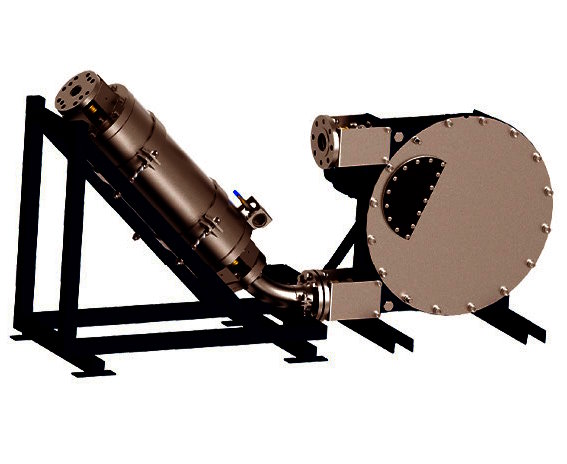
A flow damper is a device that is installed at the outlet of a peristaltic pump to reduce flow and pressure fluctuations and thus ensure the most continuous and even flow possible.
This device operates by absorbing and releasing pulse energy . If the pressure rises during the pumping cycle, the controller absorbs some of the energy and releases it back into the fluid when the pressure drops. This results in a more stable, even, and constant flow.
Types of flow stabilizers for peristaltic pumps
1. Mechanical or hydraulic dampers (hydraulic fluid dampers):
This type of damper typically contains a chamber with a flexible diaphragm or rubber tube . One side is filled with gas or a spring, the other is permeable to fluids. Changes in fluid pressure cause a change in the volume of the gas or spring, thereby absorbing the momentum energy.
-
Simple, flexible tube damper:
This type of damper consists of a highly flexible tube section that naturally absorbs vibrations. This model is frequently used in small systems or laboratory equipment. -
Active dampers:
Modern systems use sensors and electronic controllers to regulate and maintain a constant flow rate in real time. This method is frequently used in precision medical devices and automated control systems.
Advantages of using a flow stabilizer
The use of a flow stabilizer offers significant advantages, including:
-
Improved injection accuracy: In applications such as chemical or pharmaceutical injection, standardizing the flow rate can improve the accuracy of the injection volume.
-
Reduction of pressure fluctuations in the pipeline: This can prevent mechanical shocks and premature wear of the systems.
-
Extending the service life of the pump hose: By reducing pressure fluctuations and shocks, the mechanical fatigue of the hose can be reduced.
-
Improving the quality of the final product: In the food or pharmaceutical industry, the following applies: The lower the flow fluctuations and the more constant the mixing process, the higher the quality of the product.
-
Reduces noise and vibrations: The equalizer ensures a quieter and more even pump operation.
Blackow example: Input signal stabilizer
Criteria for selecting a suitable homogenizer
Several important parameters must be considered when selecting the appropriate flow stabilizer:
-
Flow rate: The damper performance must be proportional to the pump flow rate.
-
Operating pressure: The valve body and diaphragm must withstand the system pressure.
-
Fluid type: When used with corrosive or sensitive fluids, the material of the internal parts must be corrosion-resistant or inert (e.g. PTFE, PVDF or silicone).
-
Operating temperature: It is very important to select the right materials for high or low temperature conditions .
-
Effective volume of the shock absorber: The larger the internal volume of the shock absorber, the greater its ability to absorb vibrations.

Installation and maintenance
Flow regulators are very easy to install, typically at the outlet of a peristalticd pump, close to the housing. For optimal performance, the following is recommended:
-
Air shock absorbers should be installed in a location where excess air cannot accumulate inside.
-
Regularly check the gas pressure or the condition of the membrane (this provides information about the type of gas).
-
The inlet and outlet pipes are clean and not clogged.
-
When used in medical procedures , a sterilizable (CIP/SIP) model must be used.
Industrial applications of flow stabilizers
-
Pharmaceutical industry: Precise injection of pharmaceutical agents and biological solutions.
-
Research laboratories: Flow control in high-performance liquid chromatography (HPLC) systems or bioreactors.
-
Food industry: Introduction of colorants, essential oils or additives into beverage production lines.
-
Water and wastewater treatment: precise addition of chemicals such as chlorine or flocculants.
-
Chemical industry: Precise control of reagent consumption in sensitive processes.
Design methods for improving the performance of peristaltic pumps
In addition to installing a road stabilizer, you can also reduce vibrations on the road by following these tips:
-
Use a multi-cylinder pump (3 or 4 cylinders instead of 2 cylinders).
-
Choose the appropriate hose diameter depending on the required flow rate.
-
To avoid mechanical vibrations, adjust the pump speed to the optimal range.
- A speed control system with feedback (PID controller) is used.
In conclusion
Thanks to their unique design, peristaltic pumps can handle sensitive, corrosive, or contaminated liquids without direct contact with mechanical parts. However, their pulsating characteristics can compromise accuracy and efficiency in some applications.
Using a flow stabilizer is the ideal solution to this problem. This simple and effective device absorbs pressure and flow pulsations, optimizing and stabilizing the flow rate and thus increasing the accuracy, lifespan, and efficiency of the entire system.
When selecting and designing a peristaltic pump system, the appropriate homogenizer type and capacity must be taken into account to ensure accuracy, reliability and consistency of performance throughout the entire process.